
The Paper Trail · The Mediation, continued
Mediation: ‘concluded without a settlement’
The September 22 mediation ended without a settlement. Court filings show the session was held by Zoom, that the Club’s designated decision maker was a lawyer from Washington State rather than an officer of the company, and that the next court date is January 12, 2027.
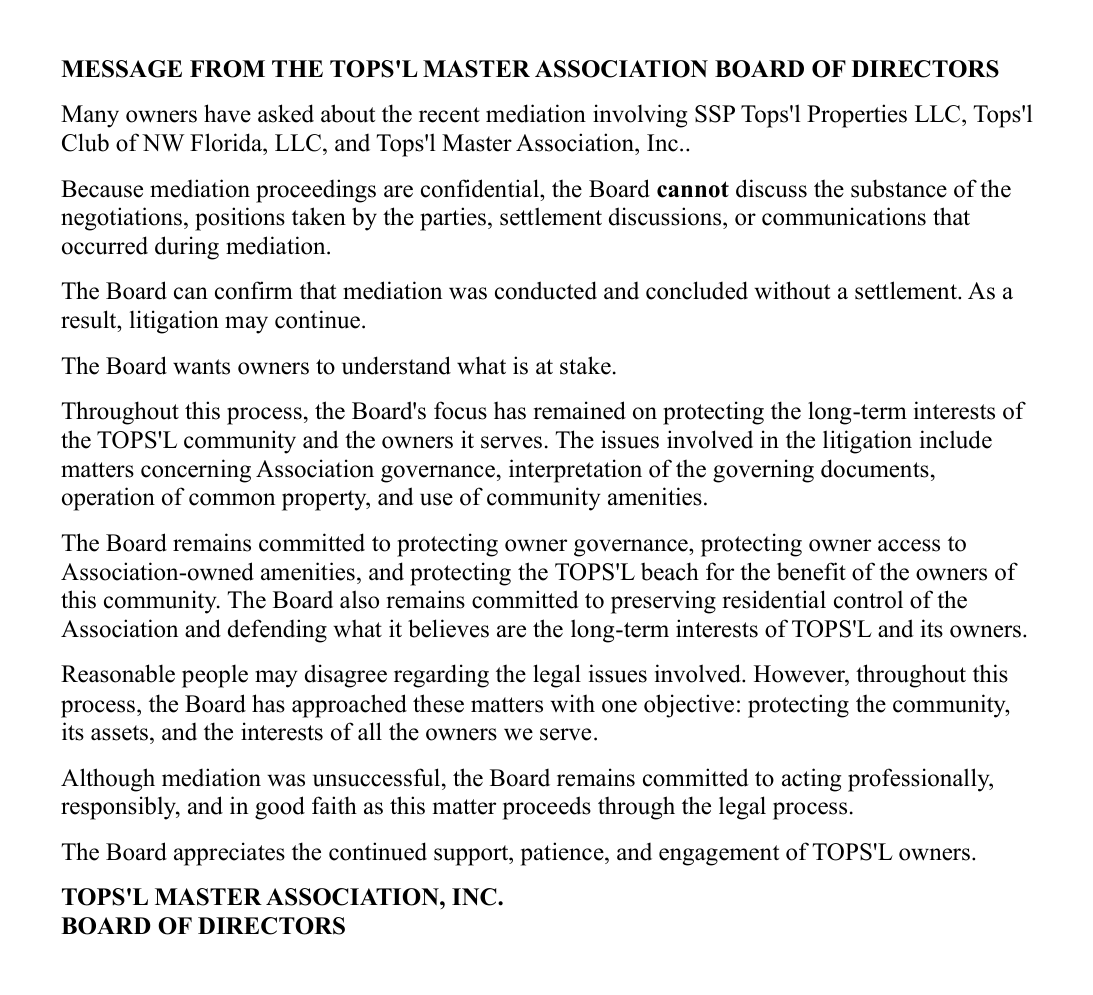
Mediation between the Master Association and the resort’s commercial owners ended without a settlement. That is the one fact the TMA board gave owners in its September 22 message: mediation “was conducted and concluded without a settlement. As a result, litigation may continue.” Everything else, it wrote, it “cannot discuss”: mediation is confidential, and no account of what was said inside it, from any side, can be checked.
The court file can. Four filings entered the week before the session, and they say what the message cannot.
What happened
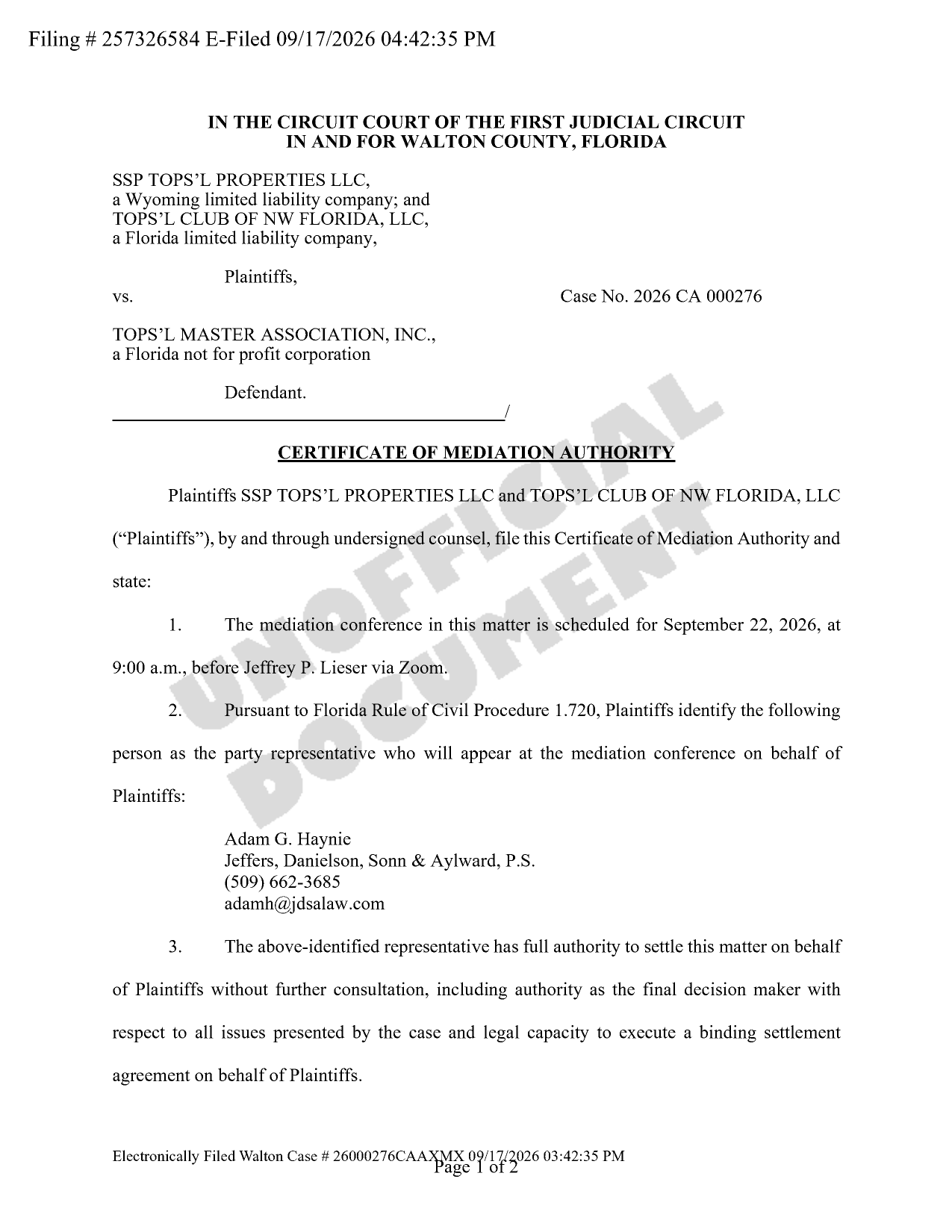
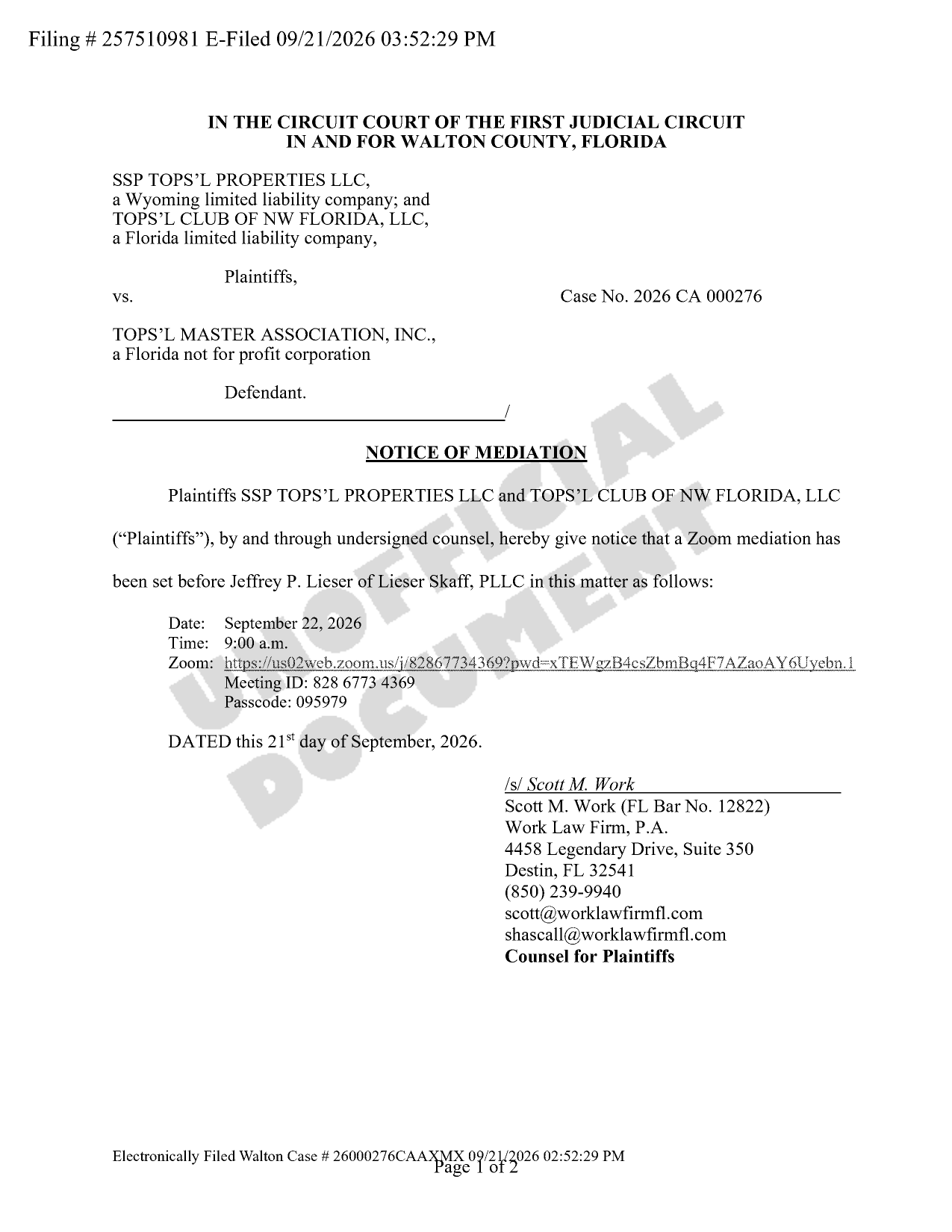
It was a video call. Both sides’ filings put the session on Zoom at 9:00 a.m. before Jeffrey P. Lieser, a Tampa business-litigation attorney and Florida Supreme Court certified mediator. Nobody sat in a room.
The Club named one person, a lawyer from Washington State. Florida’s mediation rule requires each side to name, in advance, the person with full authority to settle. The Club’s certificate names one: Adam G. Haynie of Jeffers, Danielson, Sonn & Aylward, a law firm in Wenatchee, Washington, with authority “as the final decision maker with respect to all issues presented by the case.” No officer of SSP Tops’l Properties or Tops’l Club of NW Florida is named.
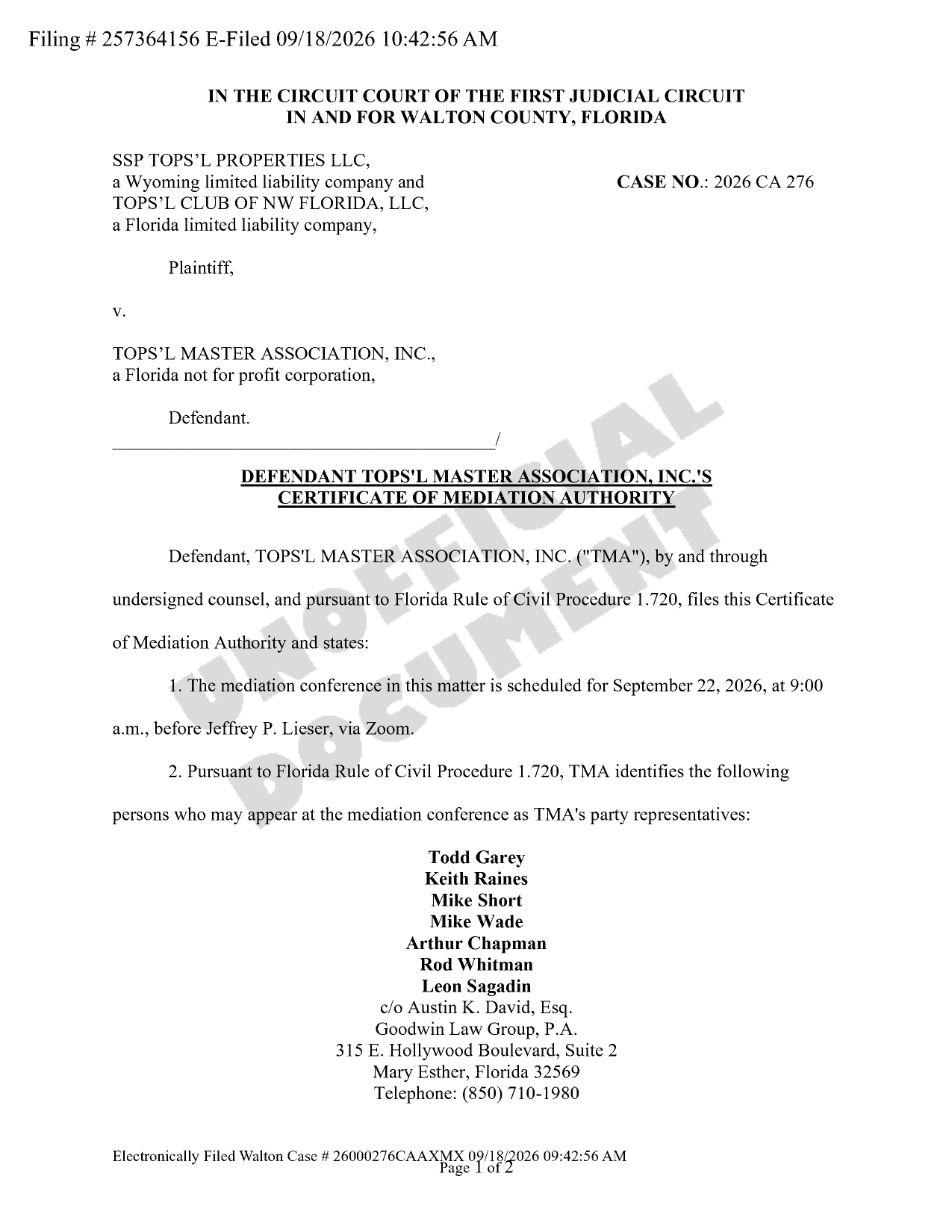
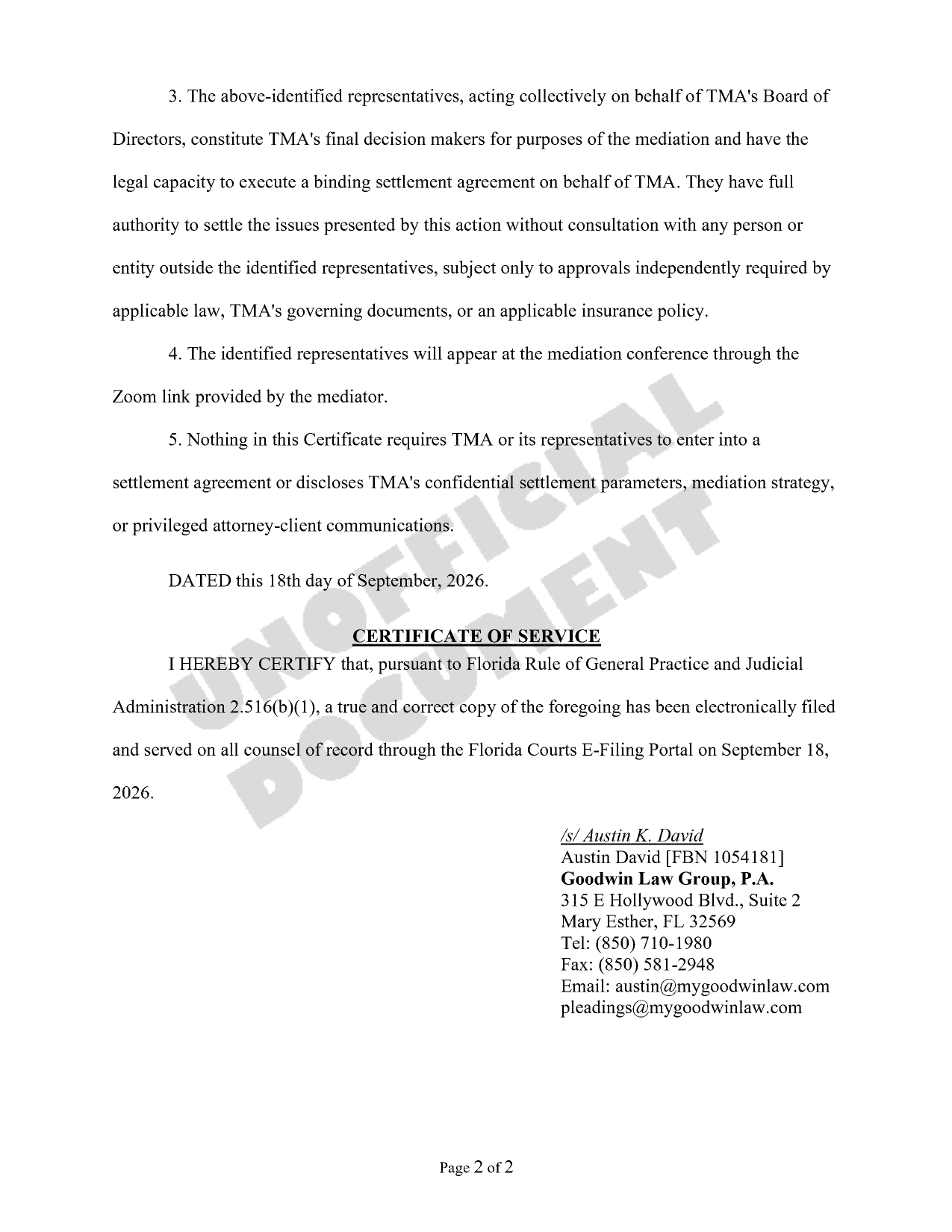
The association listed seven, with conditions. Its certificate identifies “the following persons who may appear at the mediation conference as TMA’s party representatives” and names Todd Garey, Keith Raines, Mike Short, Mike Wade, Arthur Chapman, Rod Whitman and Leon Sagadin, “acting collectively on behalf of TMA’s Board of Directors,” with authority “subject only to approvals independently required by applicable law, TMA’s governing documents, or an applicable insurance policy.” That last clause is the first public sign that an insurer has a say in any settlement the association signs.
The certificates say who was authorized to appear, not who did. The two are also not the same kind of promise: the Club’s names one person who “will appear” with authority to settle “without further consultation”; the association’s names seven who “may appear,” acting collectively, with their authority made subject to the governing documents and an insurance policy. Neither filing reports what happened in the room, and no filing since does either.
The filings that describe the session4 documents
What happens next
- September 24The Club’s own deadline. Its June 26 newsletter gave the association “a 90-day opportunity” before it filed the expanded, 245-page lawsuit it attached. Ninety days from June 26 is September 24. As of September 23 that complaint is not on the docket.
- January 12, 2027The hearing. Six days before mediation, the association’s counsel set a thirty-minute Zoom hearing before Judge Jeffrey E. Lewis on its motion to dismiss the case for skipping pre-suit mediation. It is the only date on the calendar. The Club has not answered the motion.
- In betweenSixteen weeks, at owners’ expense. The association’s June statement showed $51,116.90 in legal fees against a $30,000 annual budget, before any of this month’s filings. See what the Club is asking for in the previous article.
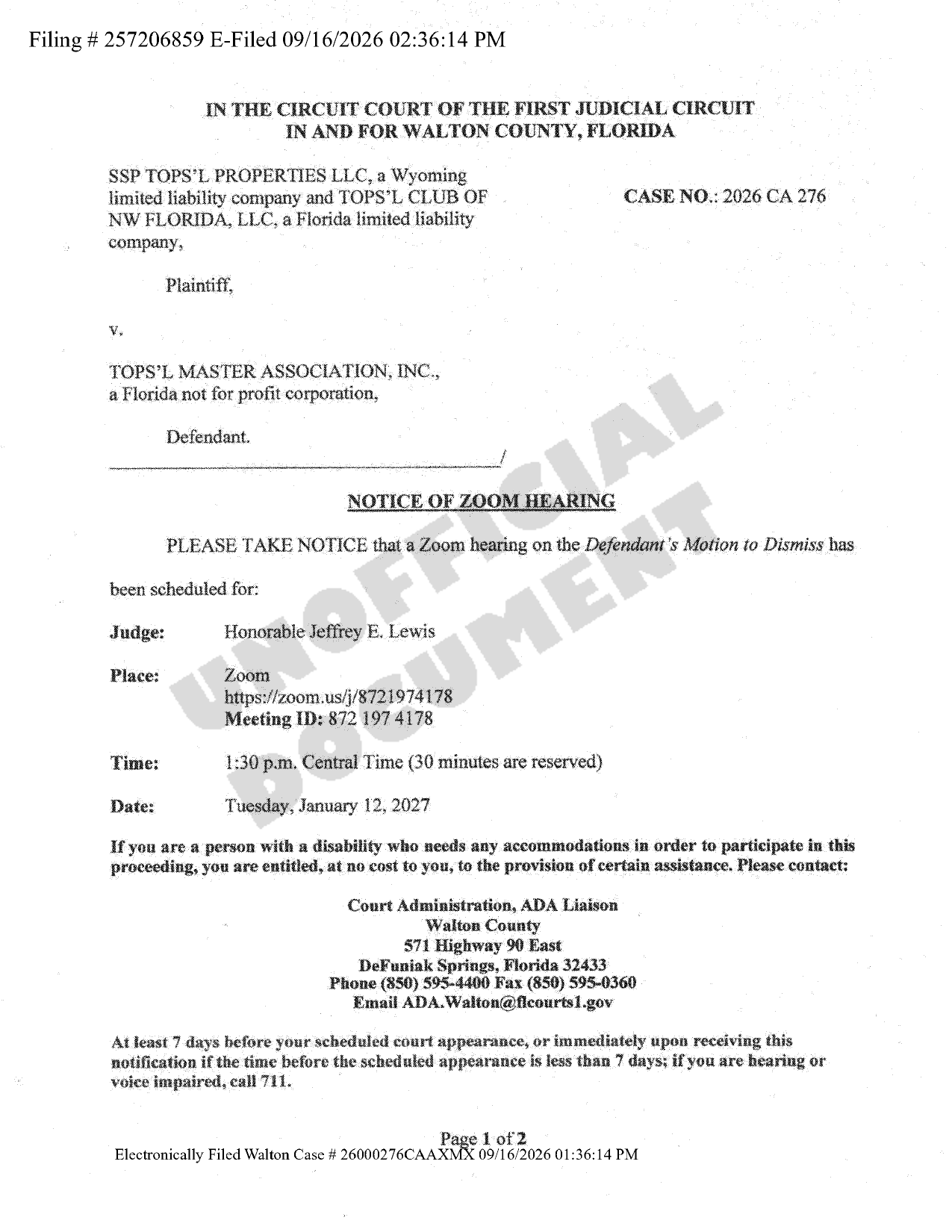
What the January hearing is about
Florida law says that before an owner and a homeowners’ association can sue each other over the common areas or the governing documents, the one who wants to sue must first send a written demand for mediation and give the other side a chance to sit down. The Club sued on May 15 without doing that. The association’s motion says the law required it and asks the judge to throw the case out.
If the judge agrees, the case is dismissed and the Club can start over by doing it properly; eight months would be lost, but nothing about who is right would be decided. If the judge disagrees, the case goes forward and the association has to answer it. The Club may argue that the September 22 mediation makes the point moot; the association may argue that a mediation held four months after suing does not fix suing first. That is what the thirty minutes are for. The 245-page complaint the Club has threatened covers the board seats, the amendments and the fee, all of which fall under the same law, so it would face the same question if filed without a demand.
The docket for case 2026-CA-000276 stands at fifteen entries. Entry sixteen, whenever it comes, is either the Club’s amended complaint, its answer to the motion to dismiss, or a dismissal. Any board decision about the litigation will appear in minutes owners can request. Those two places, not Facebook, will say what “litigation may continue” means.
The documents behind the story
Six exhibits. Open a document below, or expand the source panel in the article to read it in context.
- The board’s message, Sep 22, 2026
- The Club’s certificate, Sep 17, 2026
- The association’s certificate, Sep 18, 2026
- The association’s certificate, p. 2
- The notice of mediation, Sep 21, 2026
- The notice of hearing, Sep 16, 2026
Provenance. The TMA board’s September 22, 2026 message is reproduced in full from the copy distributed to owners that day. Court documents are from the Walton County Clerk of Courts for case 2026-CA-000276, stamped “unofficial document” by the Clerk’s viewer: docket entries 12 through 15, downloaded September 23, 2026, when the register showed fifteen entries. No order referring the case to mediation appears in the file; the session was noticed by the parties under Florida Rule of Civil Procedure 1.720. The mediator and the Club’s representative are described from their firms’ public websites. The 90-day count runs from the June 26 date on the Club’s draft complaint. The legal-fee figure is from the association’s June 2026 budget comparison, the most recent in hand.
What this article does not claim. Nothing here describes or characterizes what was said or offered in mediation; the only source on the outcome is the board’s statement. The certificates identify who was designated to appear, not who attended. This article does not assert that the Club will file anything on any date and does not evaluate the merits of any claim or defense. Quotations are verbatim.
Editor’s note. Sept. 23, 2026: An earlier version of this article said the association “sent seven owners” to the mediation and that the Club “sent” a lawyer. The certificates do not report attendance. The Club’s identifies one person “who will appear”; the association’s identifies seven “who may appear” as its party representatives. The passages were corrected to describe what each filing states, and the distinction between the two certificates was added. No source document in the court file says who attended the September 22 session.
Documents and corrections: [email protected]