
The Paper
Trail.
You've heard it's about the guest registration fee. You've heard it's about the beach. Owners disagree about both, honestly - and that disagreement is being used to divide you. Meanwhile, a company that arrived in October 2025 has closed the pool, the restaurant, and the courts to everyone outside its own program. The documented record says it's all one story: whether the owners of TOPS'L still decide anything at TOPS'L - or whether that company decides it for them.
Every claim below shows you the document itself, or names the public record where it lives. Nothing here asks you to take anyone's word for anything, including ours. Every installment tells you where to check it.
Update, Sept. 26, 2026: The September 22 mediation ended without a settlement, the association’s board told owners. The 245-page draft complaint mailed to owners in June was not on the court docket at the latest check, September 23. The next court date is January 12, 2027: a hearing on the association’s motion to dismiss. The follow-up →
New installments are added here as they publish, newest marked New.
The argument you've been handed
Both camps want you arguing about the guest registration fee and the beach. Fine - but notice what both arguments assume: that the decision is leaving your hands either way. It shouldn't be. Start there.
Start with the inventory. Owners of TOPS'L hold three things in common. The first is the guest registration fee the association collects on every rental reservation - $73 in 2026 - which funds a large share of the budget and keeps owner dues flat at $285/quarter. The second is 600 feet of private beach that belongs to the Master Association, meaning the owners. The third is the votes that control the boards deciding both. The new owner's draft lawsuit demands the fee be abolished and everything collected since 2023 clawed back, paid back by owners; it asks the court to void the 2024 beach protections, which would open the owners' beach to the Club's paying customers; and it demands the commercial owner's seats back on the board itself, while his media campaigns for the remaining votes. Every one of those demands is shown, in his lawyers' own words, in Part III.
Hold onto one principle, because every document below comes back to it: all three are owners' decisions. If owners want to lower the fee, kill it, or redesign it - that is a debate for owners to have through the board they elect. If owners ever chose to open their beach, that too would be the owners' call, made for the owners' benefit. What the record shows instead is a private, for-profit company suing to take the first two decisions out of owners' hands - a fee clawback flowing to its side of the ledger, and beach access its program can sell - and pursuing the third by two routes at once: a lawsuit demanding its seats back on the owners' board, and a media network campaigning in the owners' election. So this page never asks whether the fee is right or the beach should open. It asks the only question that matters first: why is a for-profit company fighting these battles, and why should it profit from winning them?
That company arrived in October 2025, when control of the resort's commercial side was sold. Everything owners have felt since follows from that sale: the pool and restaurant closed to you, the lawsuit your assessments are paying to defend, and an anonymous media network campaigning for the October board election. The man behind it is the story.
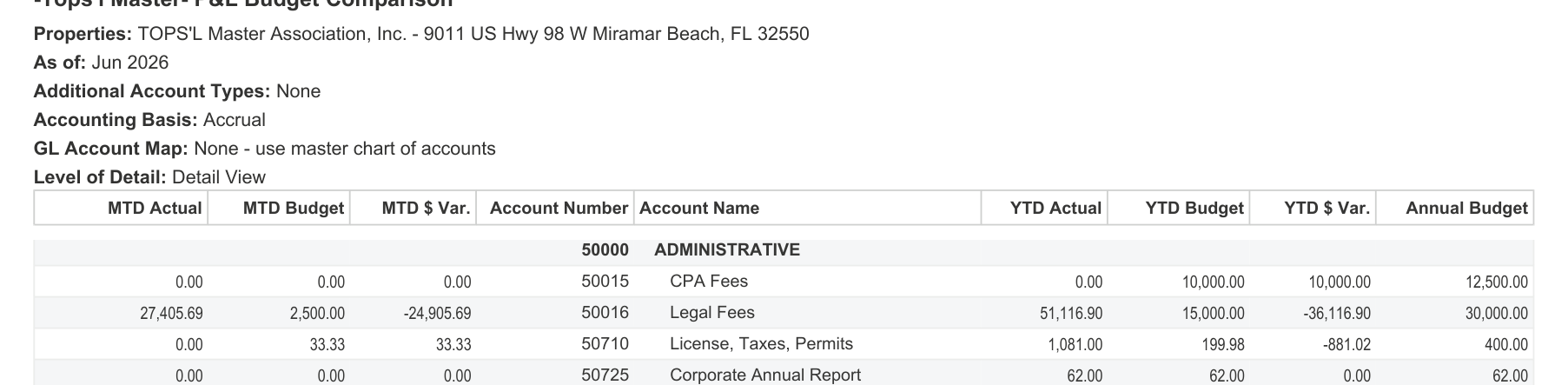
Meanwhile: the Beach Club pool and the Blue Dunes Grill, the resort’s restaurant and poolside bar, have been closed to non-program owners and guests since the Thursday before Memorial Day: no meal, no drink at the bar, unless you booked through the new owner’s program. The Master Association is being sued (Case 2026 CA 276, Walton County - pull it yourself at civitekflorida.com/ocrs), and by June its legal fees had hit $51,117 against $15,000 budgeted - $36,117 over, more than the entire year's legal budget, with the September 22 mediation still to pay for. The association's own ledger:
The buyer, and the business
In October 2025 the resort's commercial side quietly changed hands. To understand everything since, you only need to understand what business the buyer is actually in.
On October 9, 2025, entities controlled by Jon Erling Oksenholt (Oksenholt Capital / Secret Sauce Brands / GoodLife Vacations, Scottsdale, Arizona) bought the Tennis Club, Blue Dunes Grill, commercial office property, and rental operation for roughly $3.8 million. The purchase wasn't announced publicly until a press release on April 24, 2026, six and a half months later. The deed:

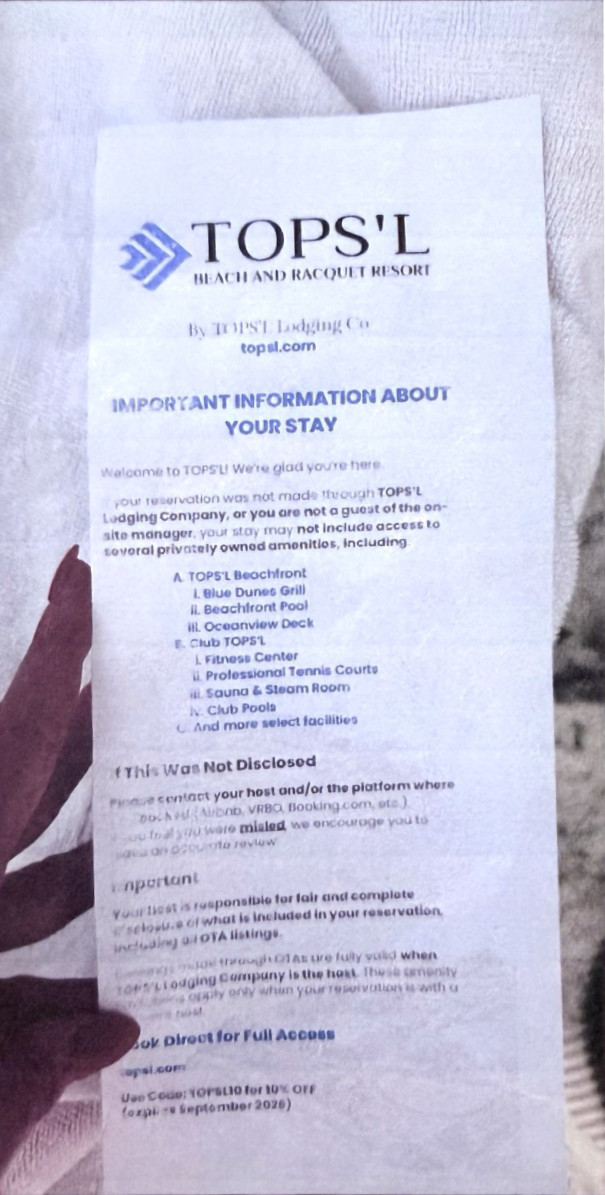
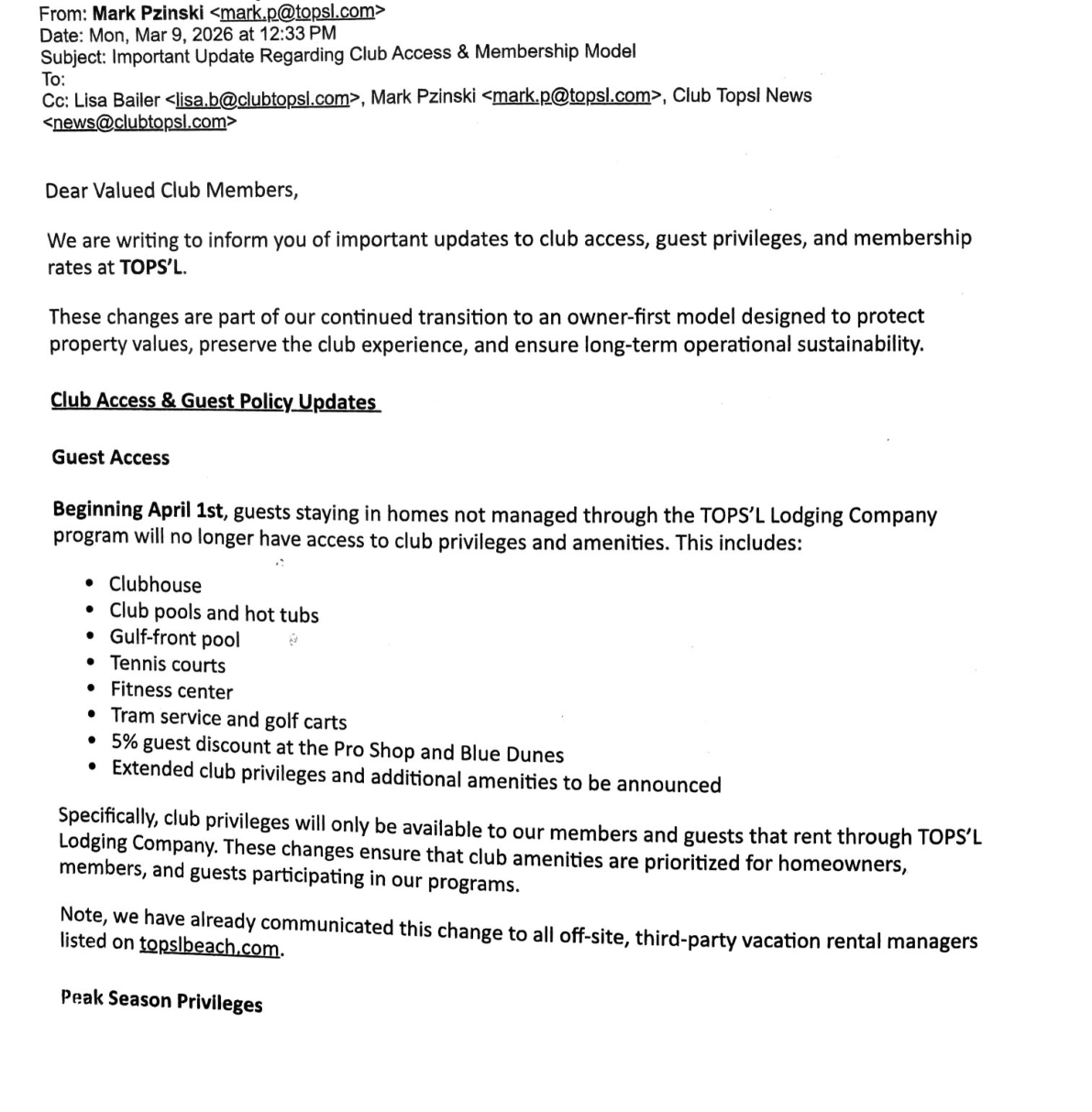
What business is he in? Not tennis courts and restaurant covers. The business he built in Oregon and bought here is rental management: a percentage of every booking, on every unit, across hundreds of doors. To that business the amenities' value isn't quality - it's exclusivity: they are worth the most when only his program's guests can use them. That framing is ours. The policy is the Club's, in writing, effective April 1: guests not booked through the lodging program "will no longer have access to club privileges and amenities" - clubhouse, pools, tennis, fitness, tram. That's not our paraphrase:
What they want
No guessing required: his lawyers wrote it down, in the 245-page draft complaint mailed to every owner. Three demands, each aimed at something owners hold.
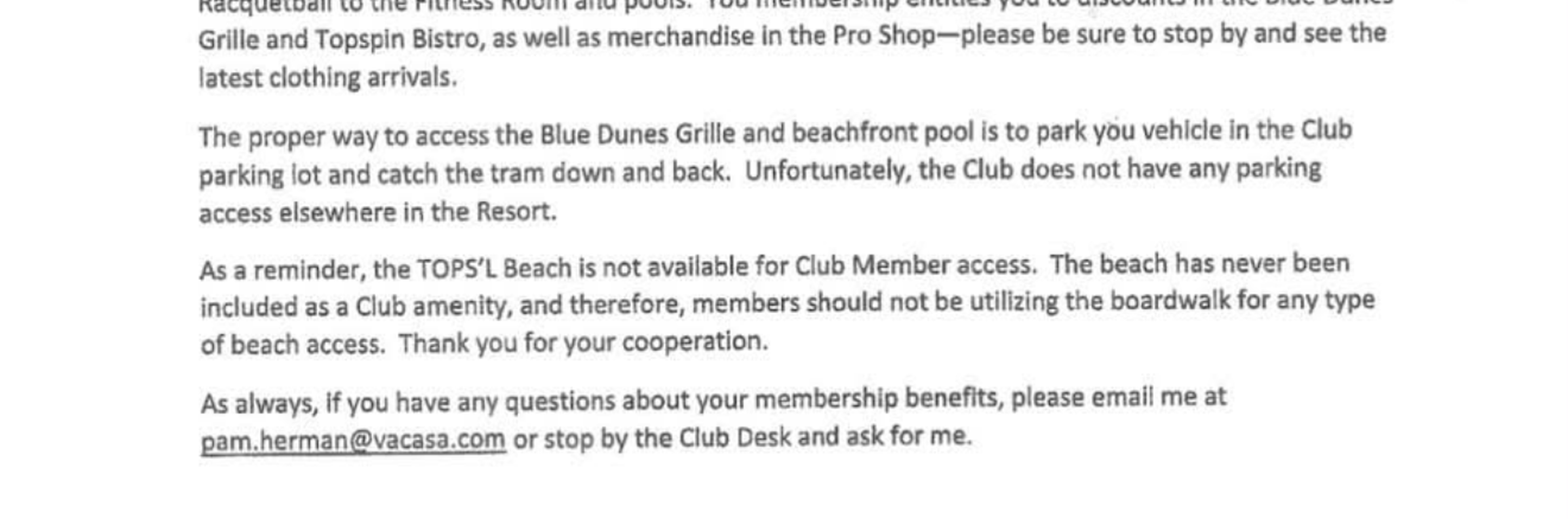
Start with the beach. The 600 feet of private beach belongs to the Master Association, meaning the owners. Under the prior operator, Club membership never included it, in writing:
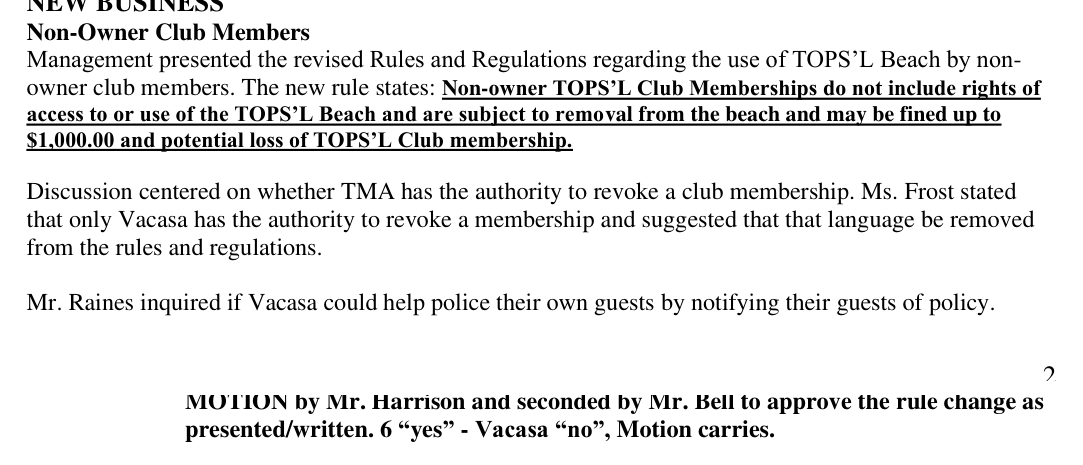
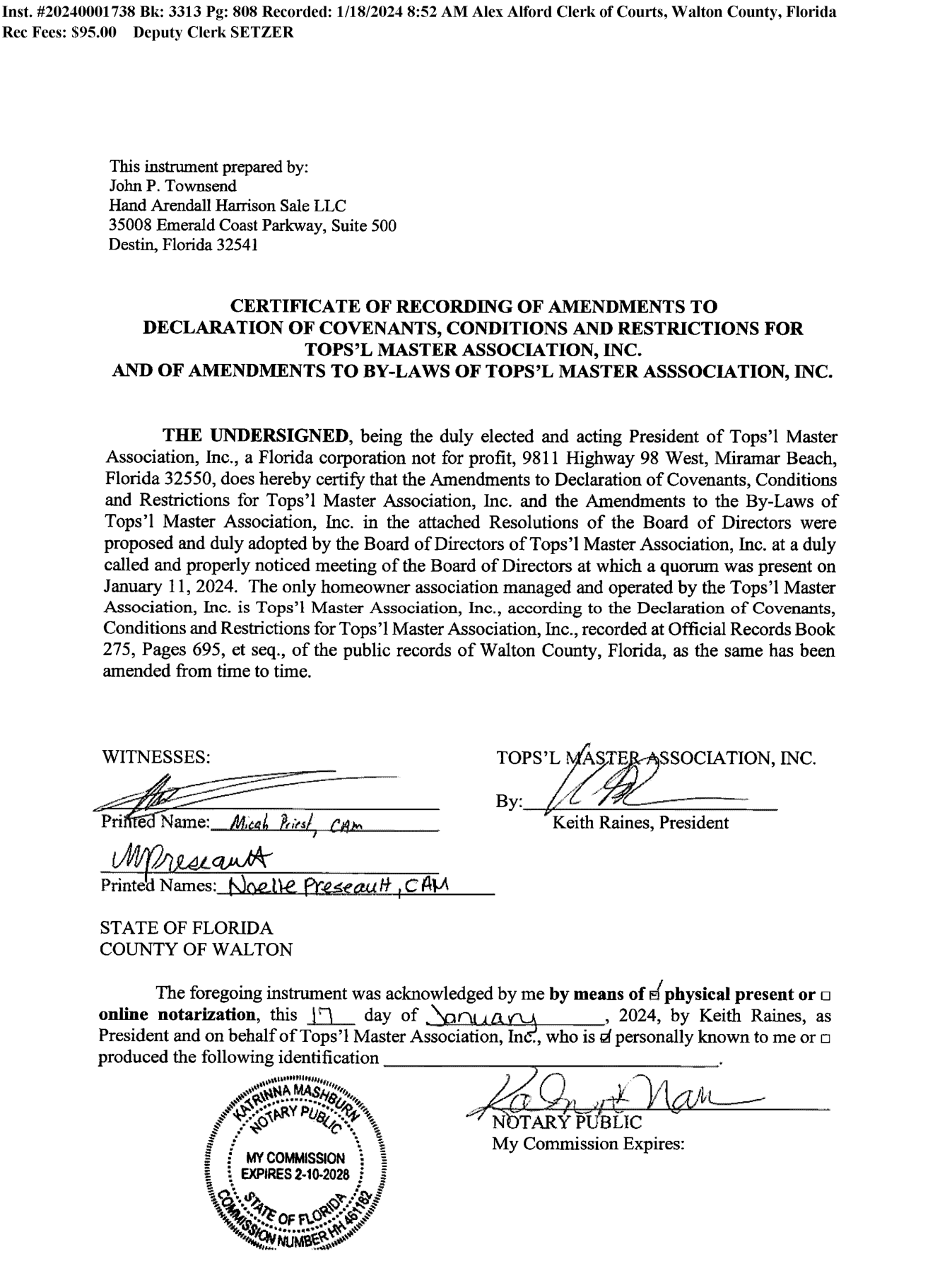
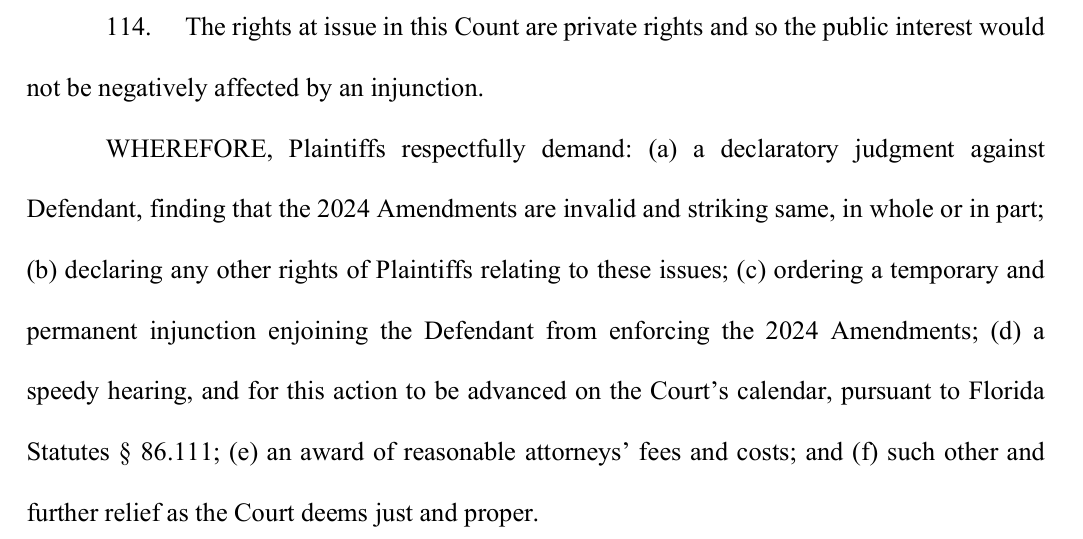
The draft complaint's Count III asks the court to void the 2024 beach protections. Those protections predate the current owner entirely: the board first adopted the beach rule on March 4, 2023 (6–1, Vacasa casting the lone "no"), then wrote it into the recorded Declaration in January 2024. In plain terms: if Count III succeeds, the Club's paying non-owner customers regain access to the owners' private beach, the crowding owners remember from the years Club members "were all over the beach," and beach access becomes an amenity he can sell. To be equally plain about what is not at stake: no filing threatens owners' own beach access. The fight is over whether his customers get your beach, and what that does to what your unit is worth. All three documents, in order - the rule, the recorded protection, the demand to void it:
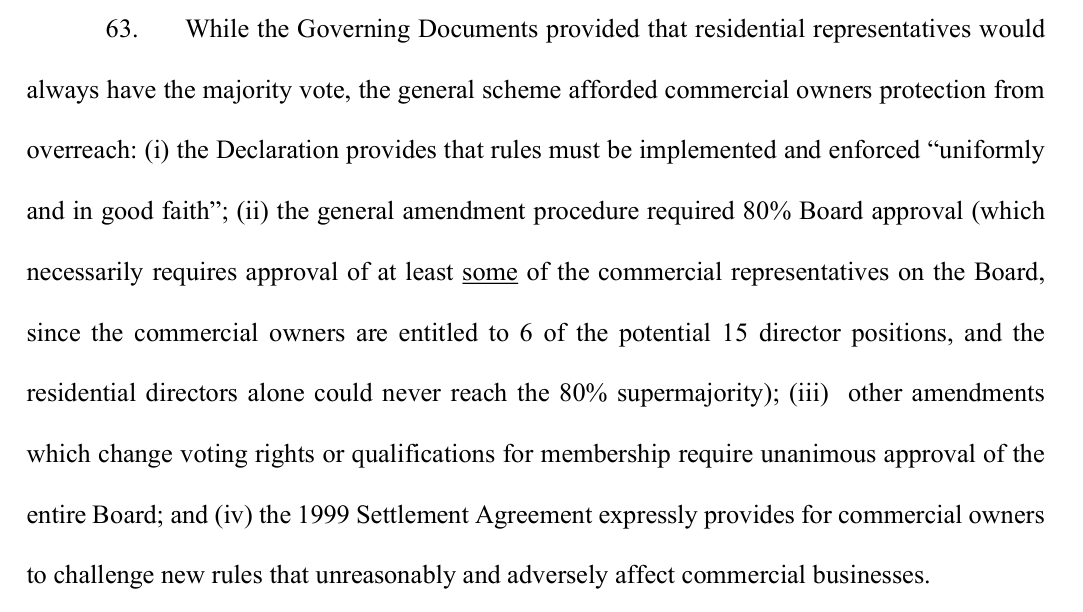
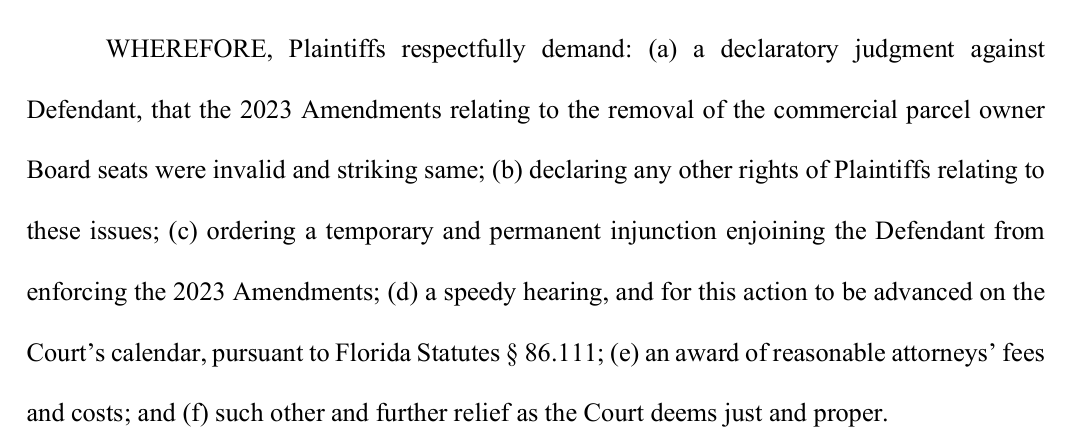
Then there are the seats themselves. Under a 1999 settlement, the resort's commercial owners held seats on the Master Association board - you have already seen one voting in this record: "Vacasa," the lone "no" in the March 2023 minutes above. In 2023 the board amended the governing documents and removed the commercial seats, over the commercial director's objection. Counts I and II of the draft complaint ask the court to declare that removal invalid and seat the commercial owners again - and by his lawyers' own math, the commercial parcels are entitled to "6 of the potential 15 director positions," enough that "the residential directors alone could never reach the 80% supermajority." That math, in their own words:
Read that slowly: the same company suing your association, locking your guests out of the amenities, and campaigning in your election is also asking a court to seat itself on your board. The demand, verbatim:
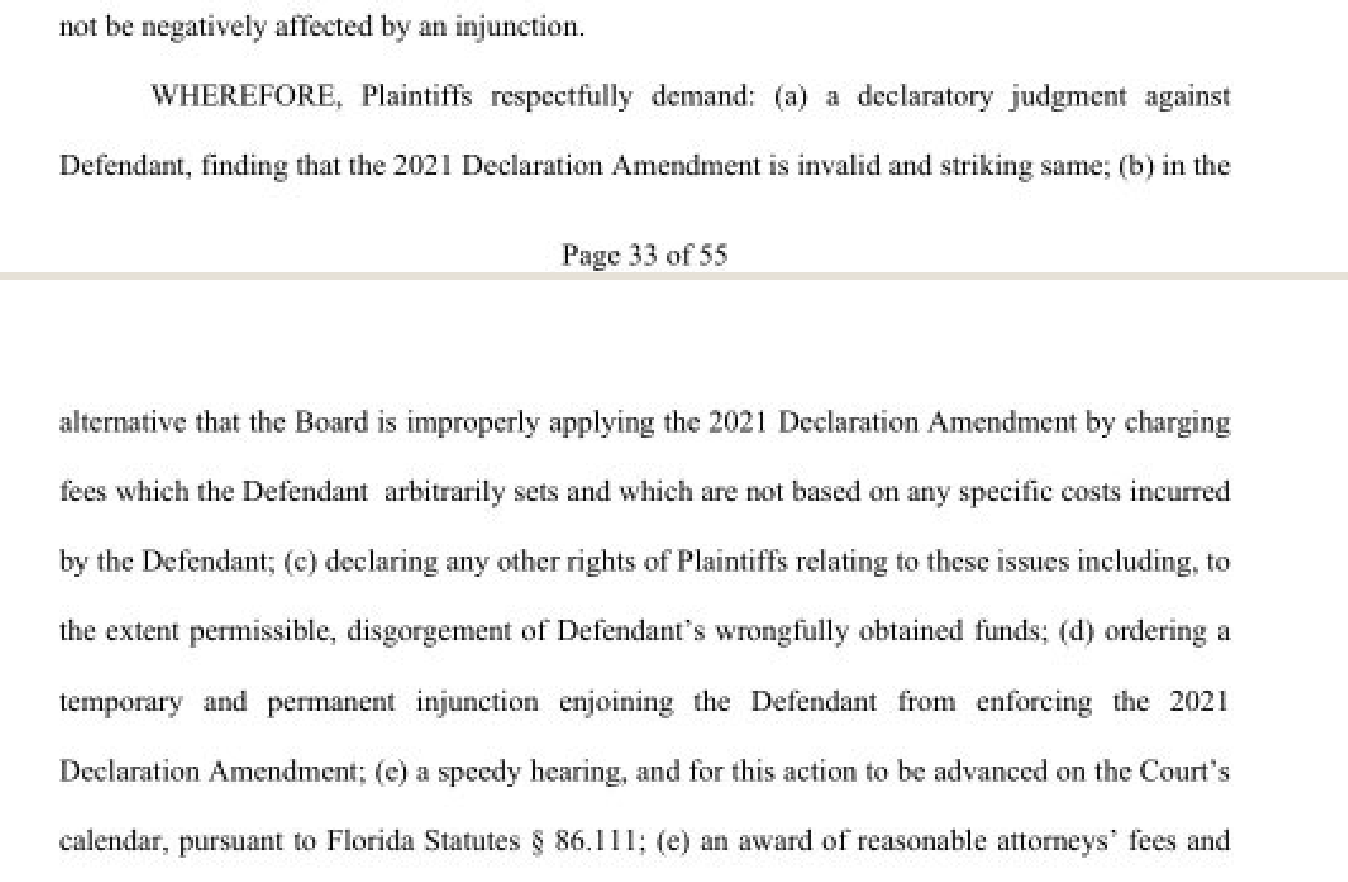
What happens if they win? The 245-page draft complaint asks the court to restore commercial seats on your board, void the beach protections, kill the guest fee and claw back what was collected, and award business-interference damages plus punitives: relief worth multiples of the $3.8M purchase price, every dollar of it paid by owners through assessments. And the guest-fee clawback would blow a hole in the budget on top of it: the association's approved 2026 budget books $539,000 in guest registration fees next to $674,880 in owner assessments - it's why dues have stayed flat at $285/quarter, and replacing it means roughly an 80% assessment increase. The clawback demand, verbatim:
And if the courtroom stalls, the same result comes cheaper: win the board elections instead. The Club's media is openly campaigning for the fall votes.
Don't take our crops for it - read the whole thing: the complete 55-page legal body, all nine counts, and its exhibit volumes (pp.56–120, pp.120–182, pp.182–245) - exactly as mailed to every owner on June 26, 2026.
The receipts · documents in this story tap to open
Every exhibit above was cut from an original. Here are those originals, in full.
Also cited, and public: the deed (Walton County Clerk, OR Book 3374, Page 824) and the court file (Case 2026 CA 276 at civitekflorida.com/ocrs, county 66). The Club and TMA emails shown above went to owners' inboxes; any owner may request a copy at [email protected].
The Fee.
Seventy-three dollars a reservation: where it came from, who set it, what the record says it pays for, and who now wants it back. Told from the association's own minutes and books. Read Part IV →
Still to come: how the pressure works, and the network of anonymous pages working your election.
Summit annual meeting & election · October 17, 2026
One email when a new chapter or update is published. No ads, and your address is used for nothing else. Every email has a one-click unsubscribe.
You will get a confirmation email first. Nothing is sent until you click the link in it.
Corrections, leads, documents, recordings, evidence: send them. It does not matter which side of this you are on. But know how it works here: a claim is a start, and a claim with a document behind it is a fact this site can publish. Without evidence, it is just another post.
Better still, do what we do. Save the email. Keep the letter. Screenshot the post before it disappears. Write down the date.
The goal is simple: that every owner, including the one writing this, knows exactly what is happening here. Everything sent gets read and checked against the record. Confidentiality respected on request.